Australia's 2026 Health Insurance Rate Rise Explained
Australia's health insurance rate rise hits 4.41%. Discover how it affects your premium and what you can do to manage costs.

Australia’s 2026 Health Insurance Rate Rise Explained
Australia’s private health insurance premiums rose by an industry average of 4.41% on April 1, 2026. That is the official figure approved by the Department of Health, and it is an average, not a ceiling. Your fund’s actual increase could be higher or lower depending on which insurer you’re with and what tier you hold.
The three things to do right now:
- Check your notice. Your insurer is required to notify you before the effective date. Find that letter or email and confirm your new premium.
- Calculate the dollar impact. Multiply your current monthly premium by 1.0441 (or your fund’s specific percentage) to see exactly what you’ll pay from April 1.
- Compare alternatives or prepay. If the increase stings, compare like-for-like policies before switching, or prepay up to 12 months at your current rate if your fund allows it.
Key Takeaways
| Point | Details |
|---|---|
| 2026 industry average | The approved average increase is 4.41%, effective April 1, 2026, but your fund’s figure may be higher or lower. |
| Hospital costs are the driver | Hospital benefits paid reached $26.7 billion in the year to September 2025, with a projected 87% benefits ratio from April 2026. |
| Variation is significant | Some gold policies are rising by around 13.3%; bronze and basic tiers tend to track closer to the average. |
| Switching without losing cover | Moving to the same or lower tier with payments up-to-date generally preserves served waiting periods. |
| Policy Hop’s role | Policy Hop monitors 28 funds and 45 offers weekly, alerting you when the right moment to switch arrives. |
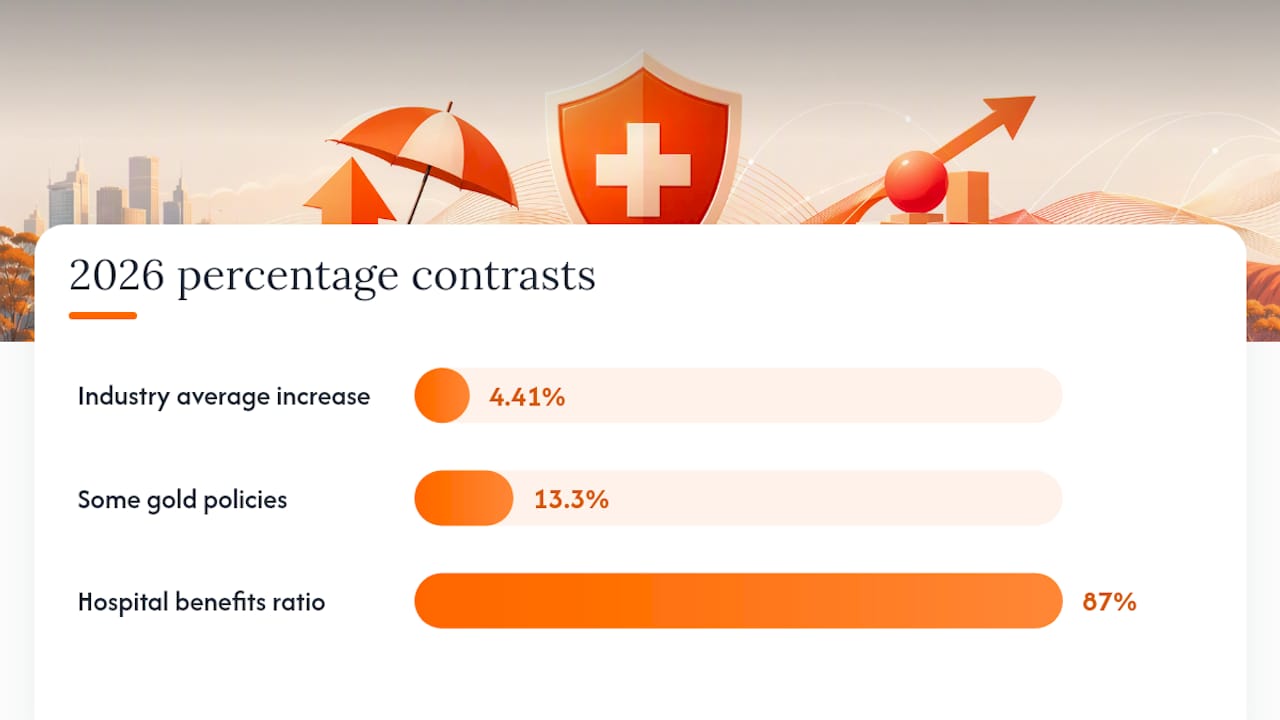
Table of Contents
- Why are health insurance rates rising in 2026?
- How do funds calculate and get approval for premium changes?
- How much are premiums rising, and does your policy match the average?
- How to find the exact change for your fund and calculate the impact
- What are your options, and what does each one cost you?
- How smart monitoring helps you switch without losing your waiting periods
- The priority actions worth taking right now
- Policy Hop tracks the right moment to switch, so you do not have to
- Sources
Why are health insurance rates rising in 2026?
The short answer: hospitals cost more to run, and Australians are using them more. The Department of Health confirmed that hospital-related costs, including wages, recruitment, power, and medical technology, rose roughly 5% in the previous financial year. Total hospital benefits paid hit $26.7 billion in the 12 months to September 30, 2025. That is the claims bill insurers are trying to keep pace with.
The key cost drivers behind the 2026 premium increase:
- Wage and staffing costs. Nursing and allied health wages have risen sharply post-pandemic, and hospitals are competing hard for staff.
- Medical technology. New diagnostics, surgical equipment, and prostheses add cost to every procedure.
- Power and operational costs. Running a hospital is energy-intensive; utility costs have climbed across the country.
- Higher claims volumes. Elective surgery backlogs built up during COVID-19 are still clearing, pushing claims higher.
- Ageing membership. Older policyholders claim more frequently and at higher cost, which lifts the average claims bill across the pool.
There is also a structural risk analysts call the “death spiral”: if healthy, younger members drop cover because premiums feel unaffordable, the remaining pool skews older and sicker, which pushes claims higher and forces further increases. Insurers are aware of this, which is why many are running new-member promotions specifically targeting younger Australians, as reported by The Guardian. Health economists note the 2026 rise also reflects years of claims growth outpacing premiums, and this year’s increase is partly an attempt to close that gap, according to analysis in The Conversation.
Pro Tip: Check your fund’s hospital benefits ratio and claims growth in its annual report. A fund paying out a high share of premiums in claims, or one with heavy exposure to elective procedures, is more likely to push increases above the industry average in future years.
How do funds calculate and get approval for premium changes?
Premium increases in Australia are not self-determined. Every insurer must submit a proposed increase to the Department of Health for review and approval. The process follows a fixed annual cycle:
The approval timeline:
- Late calendar year (prior year). Insurers submit proposed premium changes to the Department of Health for review.
- February/March. The Department approves the industry average and individual fund increases; fund-level notices are published.
- March (at least 30 days before April 1). Insurers are required to notify policyholders of their specific new premium.
- April 1. New premiums take effect across the industry.
Once approved, the Department publishes a downloadable table of average annual price changes covering every fund. This is the authoritative source for both the industry average and individual fund figures.
Where to find official numbers:
- Department of Health publications. The downloadable PDF lists every fund’s approved change.
- Privatehealth. The government’s consumer comparison site lists fund-level premium changes and explains waiting periods and switching rules.
- Your insurer’s notice. The letter or email you receive must state your new premium and the effective date.
The Commonwealth Ombudsman’s factsheet on premium increases explains your rights as a policyholder, including what to do if you believe your fund has not followed the correct notification process.
When will you hear from your insurer? Funds are required to give at least 30 days’ written notice before April 1. Most send notices in late February or March by email or post. If you have not received one by mid-March, log into your fund’s member portal or call them directly.
How much are premiums rising, and does your policy match the average?
It tells you what the sector looks like in aggregate but does not tell you what your policy will cost.
Variation between funds and tiers is significant. Some funds are approving increases well below the average; others are pushing higher. Gold hospital policies, which cover the broadest range of procedures, are seeing some of the steepest rises. SMH reporting noted some gold policies increasing by around 13.3%, while bronze and basic tiers tend to track closer to or below the average. Extras-only policies follow their own trajectory depending on the fund’s claims experience in dental, optical, and allied health.
Note: These figures use illustrative sample premiums. Your actual premium depends on your fund, tier, state, and age.
Always check your insurer notice or the Department of Health’s fund-level table for your specific increase. The industry average is a reference point, not your number.
How to find the exact change for your fund and calculate the impact
You do not need to guess. Here is how to get the precise figure in under 15 minutes:
- Locate your insurer’s notice. Check your email inbox (search your fund’s name), your member portal, or your physical mail. The notice must state your new premium and the April 1 effective date.
- Note your current premium and the new premium. Both figures should appear in the notice. If only a percentage is listed, multiply your current monthly premium by that percentage and add it to the current amount.
- Calculate the monthly and annual difference. Subtract your current monthly premium from the new one. Multiply by 12 for the annual impact.
- Check whether your payments are up-to-date. This matters for switching: if your premiums are in arrears, you may lose served waiting periods when you move funds.
- Compare the new figure against equivalent policies. Use PrivateHealth.gov.au or a comparison tool to see whether a like-for-like policy at another fund costs less.
Quick example: Current monthly premium of $200. New premium: $200 × 1.06 = $212. Monthly difference: $12. Annual extra cost: $144.
Pro Tip: Save a timestamped screenshot or PDF of your notice the day you receive it. If you later decide to switch, having a clear record of your current premium and payment status makes the process faster and protects you if there is any dispute about waiting periods.
What are your options, and what does each one cost you?
A Canstar survey found that 52% of insured adults planned to reassess their cover after receiving price-rise notices. Here is what each option actually involves:
Your main choices:
- Do nothing. Pay the higher premium and keep your current cover. Zero admin, zero risk of losing served waiting periods. The right call if your cover genuinely matches your needs and the dollar increase is manageable.
- Increase your excess. Raising your hospital excess (e.g., from $500 to $750) typically reduces your premium. You pay more out-of-pocket if you are admitted, but the premium saving can be immediate.
- Drop or reduce extras cover. Extras policies (dental, optical, physio) are often the easiest to trim. Dropping extras entirely or switching to a lower-value extras policy saves money without affecting hospital cover.
- Downgrade your hospital tier. Moving from gold to silver, or silver to bronze, cuts premiums but removes cover for specific clinical categories. Check exactly what you lose before committing.
- Switch insurer. Moving to a fund with a lower increase or a new-member offer can deliver real savings. CHOICE recommends comparing like-for-like offers and asking your current fund to match competitor sign-up incentives before switching.
- Prepay premiums. Some funds allow you to pay up to 12 months in advance at your current rate before April 1, locking in the old price temporarily.
- Split hospital and extras. You can hold hospital cover with one fund and extras with another. This sometimes unlocks better pricing on each component separately.
Simple decision guide:
| Situation | Best option |
|---|---|
| Increase is small and cover suits you | Do nothing |
| Rarely claim on extras | Drop or reduce extras |
| Healthy, low hospital risk | Raise excess |
| Fund’s increase is well above average | Switch to same tier at lower-priced fund |
| Cash flow is tight right now | Prepay at current rate if fund allows |
| Unsure what your cover includes | Review tier and understand what you hold first |
Red flags to watch for:
- Losing served waiting periods by downgrading to a lower tier or switching to a fund that does not recognize your history.
- Short-term promotional offers that revert to a higher base rate after the incentive period ends.
- Policies that appear cheaper but exclude clinical categories you actually need, sometimes called “junk cover.”
The private health insurance rebate from the ATO reduces the net cost of premiums for eligible policyholders based on income and age. If your income has changed, your rebate tier may have shifted, which affects your real out-of-pocket cost independently of the premium rise itself.
How smart monitoring helps you switch without losing your waiting periods
The biggest fear most policyholders have about switching is re-serving waiting periods. It is a legitimate concern, but it is manageable with the right information. The core rule: if you move to the same or a lower hospital tier and your premiums are up-to-date, you generally do not re-serve waiting periods you have already completed. Some funds also temporarily waive waiting periods to attract new members after a rate rise, though you need to verify this directly with the fund.
The practical workflow for switching without losing cover:
- Monitor insurer notices and sign-up offers. New-member offers, including reduced premiums, waived excesses, and gift card incentives, appear at different times across funds and have lookback windows that determine eligibility.
- Track lookback windows. Many sign-up offers require you to have been uninsured or with another fund for a set period. Knowing when your window opens is what separates a smart switch from a missed opportunity.
- Verify waiting-period status. Confirm your current served waiting periods in writing before you cancel your existing policy.
- Switch at the right moment. Timing matters. Switching too early can mean missing an offer; switching too late means paying the higher rate for months.
Benefits of using a tracking tool for this process:
- Alerts when a compatible new-member offer appears across 28 funds.
- Tracks your tenure so you know exactly when lookback windows open.
- Compares like-for-like cover quickly so you are not comparing a gold policy to a silver one by accident.
- Reduces the risk of switching at the wrong time and missing a better deal that was weeks away.
For a detailed walkthrough of the switching process, the guide to switching private health insurers in Australia covers the step-by-step mechanics. And if you want to understand how new-member offers and lookback windows actually work, the explainer on health fund signup offers is worth reading before you move.
Pro Tip: Ask your new fund in writing whether they will recognize your served waiting periods before you cancel your current policy. Get the confirmation in writing, not just a verbal assurance from a call center agent.
The priority actions worth taking right now
The most common mistake policyholders make in April is reacting too fast. They see the notice, feel the sting of a higher premium, and immediately downgrade or cancel extras without checking whether a same-tier switch at a different fund would have saved them more without any loss of cover.
The smarter sequence is: confirm first, calculate second, compare third, then act. Check your notice and get the exact dollar figure. Then look at what a like-for-like policy at another fund costs right now, including any new-member offers. Only after that comparison should you decide whether to stay, switch, or adjust your cover.
Preserving served waiting periods is the single most undervalued asset most policyholders hold. If you have served your two-month general waiting period and your 12-month obstetrics waiting period, those are gone the moment you downgrade to a tier that excludes those categories. A $30-a-month saving on premiums can cost you thousands if you need a procedure that your downgraded policy no longer covers.

Policy Hop’s tracking capability is built specifically for this window. Monitoring 28 funds and 45 tracked offers, updated weekly, it tells you when the right moment to switch arrives, not just whether switching is theoretically possible.
Policy Hop tracks the right moment to switch, so you do not have to
After you check your notice and decide the increase is worth acting on, the next question is: which fund, which offer, and when? That is where manual comparison breaks down. Offers change weekly, lookback windows vary by fund, and the difference between switching this week and next month can be a new-member discount worth hundreds of dollars.
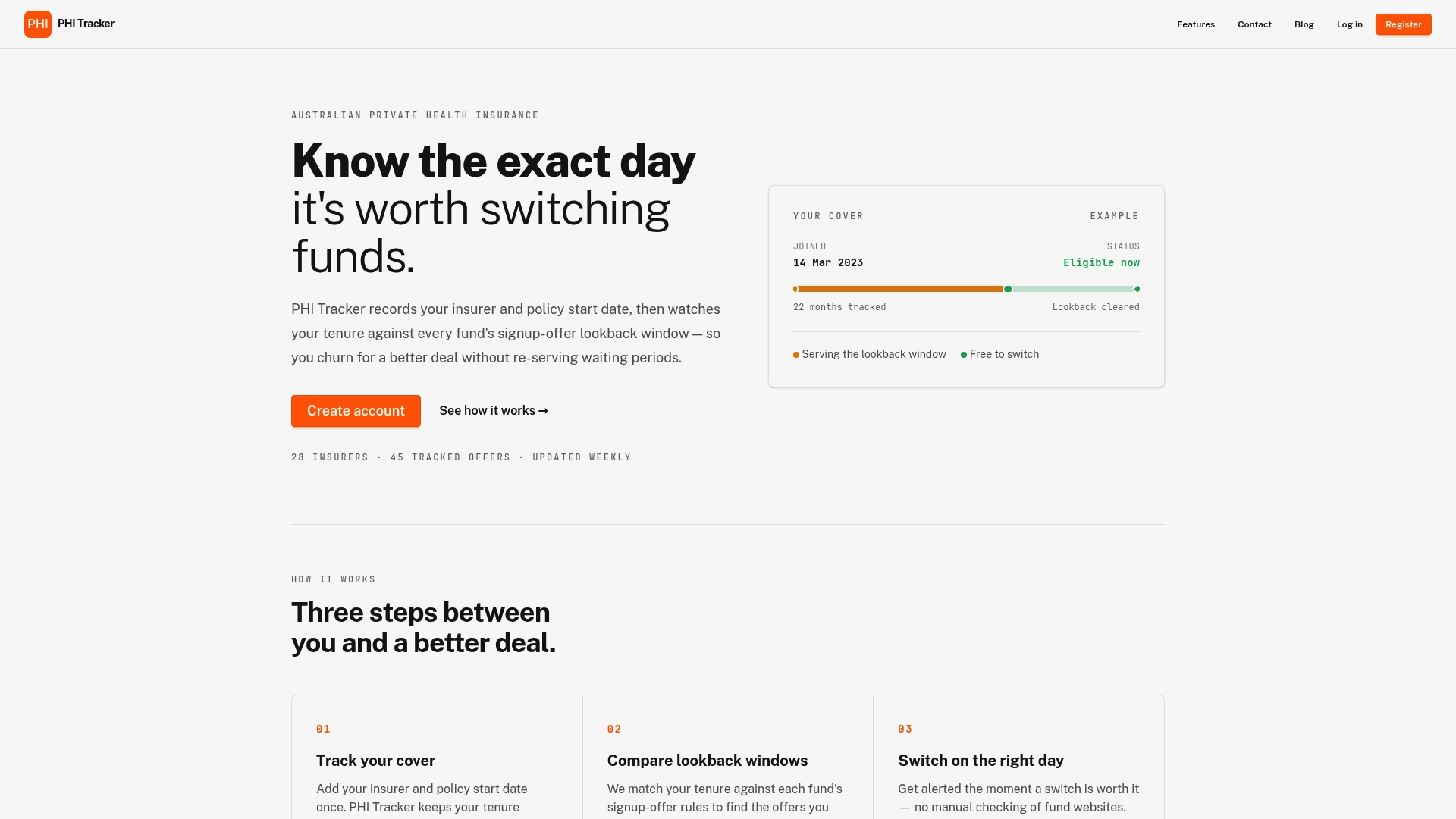
Policy Hop monitors offers across 28 Australian health funds, tracks your policy tenure against each fund’s lookback window, and sends you an alert when the timing is right to switch without re-serving waiting periods. No spreadsheets, no weekly manual checks. The service updates its database of 45 tracked offers every week, so you are working with current information, not last quarter’s deal. When an offer matches your profile and your window is open, you hear about it.
See how Policy Hop’s tracking features work and set up your monitoring before the April window closes.
Sources
- Average annual price changes in private health insurance premiums (Department of Health)
- Privatehealth
- Health Insurance Premium Increases (Commonwealth Ombudsman factsheet)
This article provides general information about Australia’s private health insurance premium increases. It is not financial or legal advice. Confirm your fund’s specific figures with your insurer or via the Department of Health’s official publications, and consider speaking with a financial adviser before making changes to your cover.
This article is general information, not a substitute for advice from a qualified financial advisor. Consult a qualified financial professional about your own circumstances before acting on anything here.
Recommended
- How Private Health Insurance Premiums Work in Australia · Health fund offer tracking
- Gold, Silver, Bronze, Basic: Private Health Insurance Tiers in Australia Explained · Health fund offer tracking
- Blog · Health fund offer tracking
- Private Health Insurance Waiting Periods in Australia: The Complete Guide · Health fund offer tracking
Ready when you are
Track your cover, switch on the right day.
PolicyHop watches your tenure against every fund's lookback window and tells you when a switch is worth it — free to start.
Create free account