Australia's Mental Health Waiver: Your Complete Guide
Discover how Australia's mental health waiver allows immediate access to inpatient psychiatric care without waiting periods. Get informed!

Australia’s Mental Health Waiver: Your Complete Guide
The mental health waiver lets you upgrade to a higher level of hospital cover and access inpatient psychiatric benefits immediately, without serving the standard waiting period. Your next step right now: confirm you’ve held any level of hospital cover for a minimum required duration, then decide whether to invoke this once-in-a-lifetime exemption when you upgrade. One important caveat before you do: excesses, co-payments, and waiting periods for other newly added services may still apply.
This exemption was designed specifically to close the access gap for people on Basic, Bronze, or Silver policies who suddenly need inpatient psychiatric care and can’t wait two months. The Australian Government Department of Health sets out the rules clearly, and understanding them before you call your insurer is the difference between using this right well and accidentally burning it.
Key Takeaways
The mental health waiver is a once-in-a-lifetime right that lets eligible Australian private health insurance holders upgrade to full psychiatric cover and access inpatient benefits immediately without serving the standard two-month wait.
| Point | Details |
|---|---|
| Eligibility basics | You need two months of hospital cover with restricted psychiatric benefits and must not have used the waiver before. |
| One-time use only | Each person on a policy gets one lifetime use; invoke it only when you have a genuine near-term need for inpatient psychiatric care. |
| What it covers | Inpatient psychiatric admissions, hospital-substitute mental health care, and inpatient drug and alcohol treatment where included. |
| Get written confirmation | Always ask your insurer to confirm the waiver application and effective date in writing before relying on the cover. |
| Policyhop tracks your timing | Policyhop monitors tenure and fund offers across 28 insurers so you know exactly when to upgrade without serving new waiting periods. |
Table of Contents
- What the mental health waiver actually covers
- Who qualifies and what the limits are
- How to use the exemption, step by step
- Does the waiver cover treatment you already started?
- What costs still apply after using the waiver
- How switching funds affects your waiver eligibility
- Tactical tips to minimize waiting periods when upgrading
- Exact questions to ask your insurer
- Why the timing of this waiver matters more than most people think
- Policyhop helps you time upgrades and avoid waiting period traps
- Sources
What the mental health waiver actually covers
The exemption applies to hospital-based and hospital-substitute mental health care. That means inpatient psychiatric treatment in a private psychiatric facility or a private hospital’s psychiatric unit, hospital-substitute mental health care (structured programs delivered outside a hospital bed but classified as hospital-substitute), and inpatient drug and alcohol treatment programs where your policy includes that clinical category.

What it does not cover is equally important. Outpatient services like visits to a psychologist, psychiatrist in a private room setting, or a counselor are typically covered under your extras or general medical benefits, not the psychiatric hospital clinical category. Those services usually carry no waiting period at all, or a shorter one, depending on your policy. The waiver has no effect on them.
| Service type | Covered by the waiver? |
|---|---|
| Inpatient psychiatric admission | Yes |
| Hospital-substitute mental health programs | Yes |
| Inpatient drug and alcohol treatment | Yes (if included in your policy) |
| Outpatient psychology appointments | No |
| Private psychiatrist rooms visits | No |
| General counseling / telehealth | No |
A quick scenario to make this concrete: if you’re admitted to a private psychiatric hospital for a two-week inpatient stay, the waiver lets your upgraded policy pay the higher benefit from day one of that admission. If you see a psychologist weekly in their private rooms, the waiver is irrelevant because that service was never subject to the psychiatric hospital waiting period in the first place.
Who qualifies and what the limits are
Eligibility comes down to four conditions, and you need to meet all of them:
- You’ve held any level of hospital cover with your current insurer for at least two months.
- Your current policy has restricted psychiatric benefits (common on Basic, Bronze, and many Silver policies).
- You have not previously used the mental health waiting period exemption with any insurer.
- You are upgrading to a policy that includes the full psychiatric clinical category (typically Gold cover, though some Silver-plus products also include it).
The exemption applies per person on the policy, not per policy. So if you and your partner are on the same family policy, each of you holds your own once-in-a-lifetime right to invoke it independently.
The rule that this exemption can be used only once in a lifetime is a strict limit here. Medibank’s consumer guidance confirms the waiver is a one-time entitlement that applies only to the psychiatric hospitalisation waiting period. Use it, and it’s gone. That means timing matters more than most people realize.
The waiver also does not remove other waiting periods on your upgraded policy. If you move from Bronze to Gold and Gold includes hip replacements, cardiac services, or other categories you didn’t previously have, those services carry their own standard waiting periods (often 12 months for pre-existing conditions). The waiver touches only the psychiatric benefit.
Pro Tip: Because this is a one-time right, don’t invoke it speculatively. Use it when you have a genuine, near-term need for inpatient psychiatric care. Using it now when you might need it more urgently in five years is a real risk.
How to use the exemption, step by step
Follow these steps in order. Skipping one can mean serving the full two-month wait anyway.
- Confirm your two-month tenure. Check your policy start date with your current insurer. You need at least two months of continuous hospital cover at any level.
- Confirm your current policy has restricted psychiatric benefits. Ask your insurer directly or check your policy document. Most Basic, Bronze, and many Silver policies restrict this category.
- Confirm you haven’t used the waiver before. If you’ve ever invoked the mental health waiting period exemption with any Australian health fund, it’s gone.
- Choose your upgraded product. Confirm the new policy includes the full psychiatric clinical category. Frank Health Insurance’s operational guidance notes that product availability can change, so verify the specific product is currently open to new members before you commit.
- Explicitly invoke the exemption when you upgrade. Tell your insurer: “I am invoking the mental health waiting period exemption under the Private Health Insurance Act.” Do not assume they’ll apply it automatically. Upgrading without explicitly invoking the waiver means you may serve the standard two-month waiting period regardless.
- Get written confirmation. Ask for a letter or email stating the effective date of your higher psychiatric benefits and confirming the waiver has been applied.
For the timing of your upgrade relative to a hospital admission, see the next section.
Pro Tip: When you call your insurer, use this exact phrasing: “I’d like to upgrade my cover and invoke the mental health waiting period exemption. Can you confirm in writing the effective date of my psychiatric hospital benefits and that the waiver has been applied to my account?”
Does the waiver cover treatment you already started?
Possibly, but only in a narrow window. The Department of Health’s guidance states that you can sometimes access cover for treatment that began before you upgraded, provided you upgrade within five days of your hospital admission.
Here’s how that plays out in practice:
- You’re admitted to a private psychiatric hospital on a Monday.
- You upgrade your cover and invoke the waiver on Wednesday (two days after admission).
- Your insurer may apply the higher psychiatric benefits to the entire admission, including the days before the upgrade.
The key conditions:
- The upgrade must happen within five days of the admission date.
- You must explicitly invoke the waiver at the time of upgrade.
- The insurer will require documentation: admission date, facility name, and confirmation of the clinical category.
Do not rely on this retrospective window without getting written confirmation from your insurer first. Call them before or on the day of admission if at all possible, and ask specifically whether the upgrade will cover the current admission. Get the answer in writing before you lodge a claim.
What costs still apply after using the waiver
The waiver removes the waiting period for higher psychiatric benefits. It does not remove your financial obligations under the policy. Out-of-pocket costs that typically still apply to include:
- Excess: The fixed amount you pay per admission or per year, depending on your policy structure.
- Co-payments: A daily charge (often around $50–$100 per day) that some policies require for hospital stays.
- Specialist gap fees: If your treating psychiatrist charges above the Medicare Benefits Schedule fee and your insurer’s agreement rate, you pay the gap.
- Ambulance charges: Unless your policy or state covers ambulance, this is a separate cost.
- Private room supplements: Some facilities charge a room upgrade fee not covered by any insurer.
The Department of Health confirms that excesses and co-payments may still apply until the standard waiting period would have elapsed. In practice, most insurers apply the excess from the first admission regardless.
Pro Tip: Before any planned admission, call both your insurer and the hospital’s billing department. Ask for an itemized cost estimate covering your excess, any co-payment, and expected gap fees. A five-minute call can prevent a four-figure surprise.
How switching funds affects your waiver eligibility
This is where people most often go wrong. The two-month tenure requirement applies to your current insurer. If you switch funds and then try to use the waiver with your new fund, you restart the clock.
The Commonwealth Ombudsman’s right-to-change guidance explains that members have the right to switch funds and carry over certain waiting periods already served, but the mental health waiver is a separate entitlement tied to your tenure and prior restricted benefit status with the fund you’re upgrading with.
Your two main options when you want to use the waiver:
- Use it with your current fund: Upgrade to a higher product within the same fund. You’ve already served your two months, so the waiver can apply immediately if you meet the other conditions.
- Switch funds first, then upgrade: You’d need to serve two months with the new fund before the waiver becomes available. This is a meaningful delay if you need inpatient care soon.
Key risks to watch:
- Switching funds without checking your waiver status can trigger new waiting periods for services you’d already served with your old fund. The Privatehealth explains how served waiting periods transfer and where they don’t.
- If you upgrade within your current fund without explicitly invoking the waiver, you may serve the full two months for psychiatric benefits anyway.
- Product availability matters: some funds have closed certain Gold products to new members. Confirm the target product is open before you commit to a switch.
For a detailed walkthrough of switching safely, the guide to switching private health insurers in Australia covers the right-to-change process and how to avoid restarting waiting periods.
Tactical tips to minimize waiting periods when upgrading
These steps, grounded in government guidance and industry practice, reduce the risk of delays or errors:
- Time your upgrade carefully. If you anticipate needing inpatient psychiatric care soon, upgrade before that need becomes urgent. Once you’re in crisis, the five-day retrospective window is your only fallback.
- Confirm the psychiatric clinical category is included. Not all Gold products are identical. Ask your insurer to confirm in writing that the specific product you’re upgrading to includes the psychiatric hospital clinical category.
- Align your paperwork. If you’re upgrading close to an admission, make sure the upgrade effective date, the waiver confirmation, and the hospital admission paperwork all reference the same dates.
- Keep copies of everything. Save the written confirmation of the waiver, the effective date letter, and any insurer reference numbers. Attach these to your hospital claim.
- Check lookback windows and offer eligibility. Some funds offer signup bonuses or reduced excesses for new members. If you’re considering switching funds, check whether the lookback window on those offers still applies to you.
- Monitor product openings. Funds periodically open and close products. An alert-based approach, tracking when a preferred product becomes available, can help you time a switch without serving unnecessary waiting periods.
Pro Tip: Use a tracking tool to monitor your policy tenure and fund offer windows. Knowing exactly when you hit the two-month mark, and which products are currently open, removes the guesswork from timing an upgrade.
Understanding the full range of private health insurance waiting periods helps you see where the mental health waiver fits within the broader picture of cover changes.
Exact questions to ask your insurer
When you contact your fund, get answers to each of these in writing:
- “Do I currently have restricted psychiatric benefits on my policy?”
- “Have I previously used the mental health waiting period exemption with any fund?”
- “If I upgrade to [product name] today and invoke the mental health waiting period exemption, what is the effective date of my higher psychiatric benefits?”
- “Will my excess and co-payments apply to a psychiatric admission under this upgraded policy?”
- “Will upgrading trigger any new waiting periods for other services on the new policy?”
- “Can you confirm all of this in a written email or letter before I finalize the upgrade?”
When you call, open with: “I’d like to confirm my eligibility for the mental health waiting period exemption and upgrade my cover. Can you walk me through the process and send me written confirmation of the waiver and effective date?”
Save every email, reference number, and call recording reference. When you’re admitted to hospital, bring printed copies of the written confirmation and attach them to your claim paperwork. Claims that fail often do so because the member couldn’t prove the waiver was invoked at the time of upgrade.
Why the timing of this waiver matters more than most people think
The mental health waiver is one of the more underused rights in Australian private health insurance, often due to timing issues. People discover it after they’ve already been admitted, or after they’ve switched funds and restarted the clock. A few get it right but forget to invoke it explicitly, then spend two months waiting for benefits they could have accessed on day one.
What strikes me most about this provision is how deliberately it was designed. The Department of Health’s private health insurance reform data reflects years of policy work to improve access to psychiatric care for people on lower-tier policies. The waiver is the practical result of that work. It’s a real right, not a loophole, and it’s worth treating it with the same care you’d give any one-time financial decision.
The strategic point: hold the waiver until you genuinely need it. Using it speculatively, because you’re upgrading anyway, can leave you without protection when the need is more acute. And if you’re close to needing inpatient care now, move fast. The five-day retrospective window closes quickly.
Policy Hop helps you time upgrades and avoid waiting period traps
Knowing when to upgrade is half the battle. The other half is knowing which products are open, which funds have the best offers right now, and whether your tenure qualifies you for a switch without restarting waiting periods.
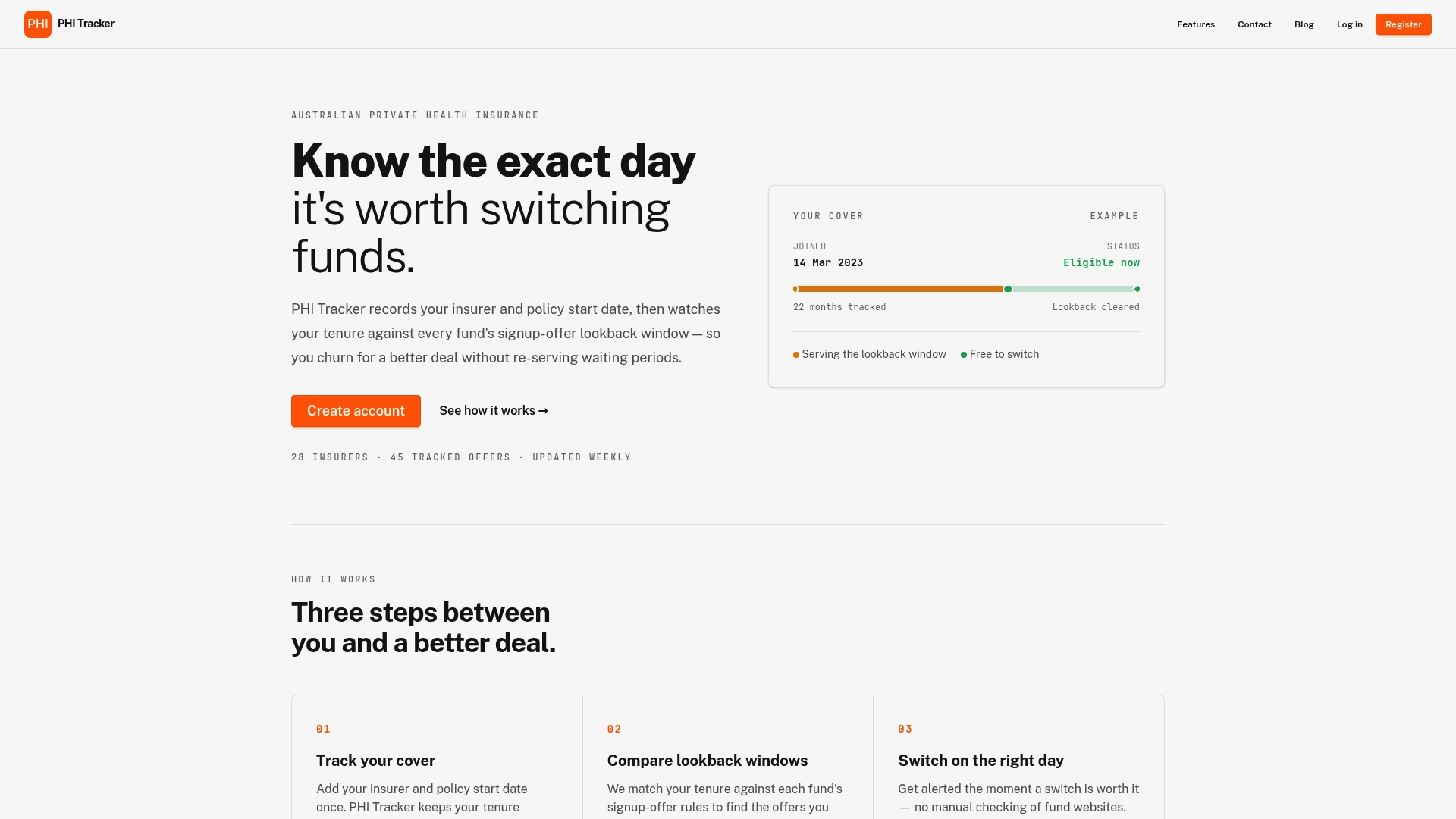
Policy Hop’s policy tracking features monitor your tenure against 28 Australian health funds and 45 tracked offers, updated weekly. When you’re approaching the two-month mark, or when a fund opens a product that fits your needs, Policy Hop sends you an alert. No manual checking, no missed windows. For anyone considering invoking the mental health waiting period exemption, that kind of timing precision matters. Check your eligibility and set up tenure tracking at Policy Hop.
Sources
These are the primary sources to consult before making any decisions about your cover:
- Waiting periods and exemptions | Australian Government Department of Health, Disability and Ageing
- Privatehealth
- Accessing the mental health waiver | Frank Health Insurance
- The right to change (Commonwealth Ombudsman brochure)
- Waiting periods in health insurance | Medibank
This article is general information, not a substitute for advice from a qualified financial advisor. Consult a qualified financial professional about your own circumstances before acting on anything here.
Recommended
- Private Health Insurance Waiting Periods in Australia: The Complete Guide · Health fund offer tracking
- Blog · Health fund offer tracking
- How to Switch Private Health Insurers in Australia Without Losing Cover · Health fund offer tracking
- Gold, Silver, Bronze, Basic: Private Health Insurance Tiers in Australia Explained · Health fund offer tracking
Ready when you are
Track your cover, switch on the right day.
PolicyHop watches your tenure against every fund's lookback window and tells you when a switch is worth it — free to start.
Create free account