Waiting period waiver: what Australian policyholders need to know
Discover how waiting period waivers work in Australian private health insurance and learn when you can benefit from significant upgrades.

Waiting periods can be waived in Australian private health insurance, but the circumstances are narrower than most people expect. Two statutory mechanisms exist: portability (your served waiting periods transfer when you switch to equivalent cover) and the once-only mental health exemption (you can upgrade to higher psychiatric benefits without re-serving the two-month wait). Beyond those, commercial waivers are real but modest, typically removing short extras waits of 2–6 months as a signup incentive. The Department of Health and the Private Health Insurance Ombudsman are the authoritative sources on both.
Three things to do right now:
- Read your Product Disclosure Statement (PDS) — it states every waiting period that applies to your specific policy.
- Ask your insurer or prospective fund for written confirmation of any waiver or portability promise before you switch.
- If you want ongoing alerts when an insurer's offer matches your eligibility window, a monitoring service like Policy Hop can track that for you.
Key takeaways
Portability and the once-only mental health exemption are the only statutory waiting period waivers in Australian private health insurance; commercial promotions are real but limited to short extras waits.
| Point | Details |
|---|---|
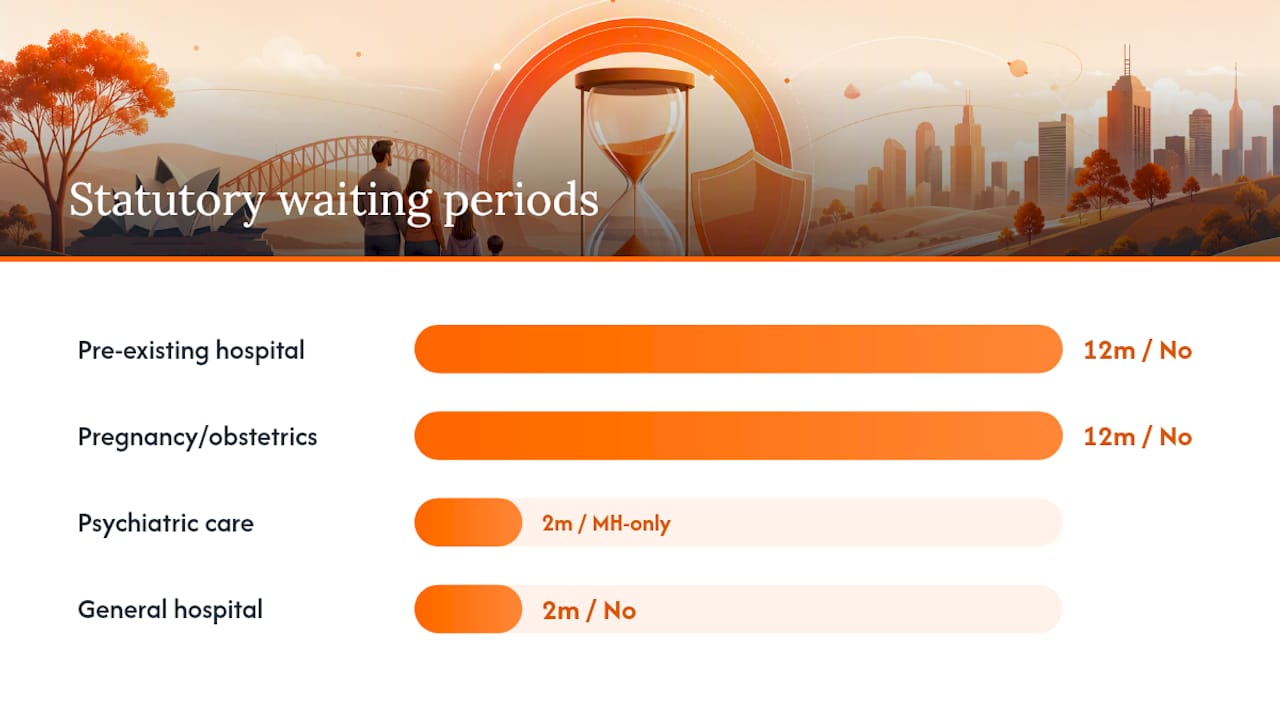
| Statutory waiting period limits | Government maximums are 12 months (pre-existing/obstetrics) and 2 months (psychiatric/general hospital). |
| Portability preserves served periods | Switching to equivalent cover transfers your served waits; upgrading to higher benefits triggers new ones. |
| Mental health exemption is once-only | You can upgrade psychiatric benefits without re-serving the 2-month wait, but only once per lifetime. |
| Promotional waivers cover extras, not hospital | Signup offers typically waive 2–6 month extras waits; 12-month hospital waits are almost never touched. |
| Policy Hop tracks your switching window | Policy Hop monitors 28 funds and alerts you when your tenure and an insurer's offer align. |
Table of Contents
- What is a waiting period waiver in Australian private health insurance?
- The main lawful exemptions and common insurer waivers explained
- What insurers commonly waive — and what they almost never will
- How to apply for or confirm a waiting period waiver
- Risks, trade-offs and special rules to watch for
- Expected timelines and what you may still have to pay
- Evidence-based checklist: what to do now to get or protect a waiver
- What I've seen policyholders get wrong most often
- How Policy Hop helps you time switches without re-serving waiting periods
- Official resources and insurer pages to check now
- Sources
What is a waiting period waiver in Australian private health insurance?
Before you can claim benefits under most Australian private health insurance policies, you must serve a waiting period — a set length of time after joining during which you cannot claim for that category of treatment. The Department of Health sets the statutory maximums that no insurer can exceed:
- 12 months for pre-existing conditions and pregnancy/obstetrics
- 2 months for psychiatric care, rehabilitation, and palliative care
- 2 months for most other hospital services
- No waiting period for accident-related treatment in most circumstances
Waiting periods exist to protect the system from adverse selection — the risk that people join only when they know they need treatment, claim immediately, then cancel. The Ombudsman and Department of Health both frame them as an industry-stability measure, not a punitive one.
Portability is the key concept for anyone switching funds. Under the Private Health Insurance Act 2007, insurers cannot impose new waiting periods when you move to a policy at the same level of benefits. Your new fund must accept a Transfer/Clearance Certificate from your old fund as proof of what you have already served.
One important distinction: holding an extras-only policy does not count towards hospital waiting periods. If you later add hospital cover, you start your hospital waits from scratch.
The main lawful exemptions and common insurer waivers explained
There are two statutory exemptions and one category of commercial promotion. Knowing which one applies to your situation determines what you can realistically expect.
The mental health waiting period exemption
This is the most significant statutory waiver available to Australian policyholders, and it is once-only per lifetime. The rules are specific:
- You must have already held any hospital cover for at least two months before you can use it.
- It allows you to upgrade to a higher level of psychiatric benefits without serving the standard two-month wait again.
- You can only use it once. After that, any further upgrade to psychiatric benefits triggers the standard two-month wait.
Many policyholders assume they can join a fund and immediately access the exemption. They cannot. The two-month baseline must be served first.
Portability: your served waiting periods travel with you
When you switch to a policy with the same level of cover, your served waiting periods transfer to the new fund. The mechanism is the Transfer/Clearance Certificate, which your old insurer provides and your new insurer must accept. Upgrade to higher benefits, though, and you will serve new waiting periods for those added services only.
Commercial promotional waivers
These are marketing tools, not statutory rights. Insurers run signup offers that waive short extras waiting periods — optical, dental check-ups, physiotherapy — to attract new members. The Ombudsman's brochure on waiting periods is direct: promotional waivers are usually limited to extras cover, and 12-month waits for pre-existing conditions or obstetrics are rarely touched.

What insurers commonly waive — and what they almost never will
The gap between what a promotional waiver sounds like and what it actually covers is where most policyholders get caught out.
Commonly waived in signup offers:
- Optical (glasses, contact lenses) — typically a 2-month wait removed
- Dental check-ups and preventive dental — 2-month waits often waived
- Physiotherapy and remedial massage — short waits frequently included
- Selected allied health services (chiropractic, podiatry)
These waivers are conditional. They may require you to join by a specific date, maintain continuous payments for a set period, or apply only to particular extras items listed in the offer terms.
Near-certain exclusions — insurers almost never waive these:
- 12-month wait for pre-existing conditions (hospital cover)
- 12-month wait for pregnancy and obstetrics
- Major dental (crowns, bridges, orthodontics)
- Major prostheses and joint replacements
The reason is straightforward: waiving a 12-month pre-existing condition wait would expose the fund to immediate high-cost claims from people who joined specifically for that treatment. No insurer does this as a standard promotional offer, and the Ombudsman confirms this as standard industry practice.
For a clear breakdown of how waiting periods apply differently to hospital and extras policies, the Policy Hop guide on hospital cover versus extras cover is worth reading before you switch.
How to apply for or confirm a waiting period waiver
There is no universal application form for a waiting period waiver. The process depends on whether you are claiming portability, using the mental health exemption, or taking up a promotional offer.
- Check your current PDS. Locate the waiting periods section and note every period that applies to your policy and the date your cover started.
- Calculate what you have already served. Your insurer can confirm this in writing — ask for it.
- Request a Transfer/Clearance Certificate from your current insurer before you switch funds. This document records your served waiting periods and is required by the Private Health Insurance Act 2007.
- Confirm with your new insurer that the certificate will be accepted and that no new waiting periods will apply for the services you have already served.
- For the mental health exemption: notify your new or current fund in writing that you wish to use the once-only exemption. Confirm you have held hospital cover for at least two months.
- For promotional waivers: get the offer terms in writing (email or letter), including the specific extras items covered, the waiver duration, and any conditions.
Documents to have ready:
- Photo ID and current policy number
- Policy start date (from your welcome letter or insurer app)
- Transfer/Clearance Certificate from your old fund
- PDS pages showing the benefits and waiting periods for both old and new policies
The Policy Hop guide on switching private health insurers walks through the Transfer/Clearance Certificate process in detail.
Risks, trade-offs and special rules to watch for
The mental health exemption is the most consequential decision most policyholders will make in this space, and the stakes of using it poorly are high.
Using the mental health exemption to access a marginally better psychiatric benefit — say, a slightly higher daily benefit for a fund you plan to leave in two years — permanently exhausts a once-in-a-lifetime right. If you later face a serious mental health episode and want to upgrade to a fund with genuinely superior inpatient psychiatric cover, you will serve the full two-month wait. The Department of Health guidance recommends reserving the exemption for the upgrade most likely to deliver significant clinical value.
Breaks in cover are another common trap. If your policy lapses — even briefly — you may need to re-serve waiting periods for services you had already qualified for. Suspended policies (for example, during overseas travel) are treated differently by different funds; check your PDS for the exact rules.
Upgrading within the same fund is not automatically safe either. Moving from a Bronze to a Gold hospital policy triggers new waiting periods for every service category added at the Gold tier. The privatehealth.gov.au guidance is clear: same level of cover preserves your served periods; higher benefits do not.
Expected timelines and what you may still have to pay
Even with a waiver or portability transfer in place, out-of-pocket costs do not disappear.
| Service category | Statutory maximum wait | Typical promotional waiver (extras) |
|---|---|---|
| Pre-existing conditions (hospital) | 12 months | Not typically waived |
| Pregnancy/obstetrics (hospital) | 12 months | Not typically waived |
| Psychiatric/rehab/palliative (hospital) | 2 months | Mental health exemption only |
| General hospital services | 2 months | Not typically waived |
| Extras (optical, dental, physio) | Set by insurer | 2–6 months commonly waived |
Transfer/Clearance Certificates are usually issued within a few business days of requesting them, but allow up to two weeks if your fund is slow. Your new insurer applies the portability transfer when you join — confirm this has been processed before you need to make a claim.
Costs to expect even when a waiver applies:
- Excess payments on hospital claims (your chosen excess still applies)
- Co-payments for some hospital services
- Restricted benefits if you are admitted to a non-agreement hospital
- Benefit limits on extras — a waived wait does not increase your annual cap
Evidence-based checklist: what to do now to get or protect a waiver
- Pull out your current PDS and note your policy start date and every waiting period listed.
- Calculate which periods you have already served and ask your insurer to confirm this in writing.
- If switching funds, request a Transfer/Clearance Certificate from your current insurer before cancelling.
- Confirm with your new fund in writing that the certificate will be accepted and no new waits apply for served services.
- If you plan to use the mental health exemption, notify your fund in writing and confirm you meet the two-month eligibility requirement.
- For any promotional waiver, get the full offer terms in writing before joining.
- Set calendar reminders for key dates: when remaining waits expire, when promotional conditions end, and when your annual extras limits reset.
What I've seen policyholders get wrong most often
The mental health exemption mistake is the one that genuinely costs people. Policyholders use it to access a marginally better benefit at a fund they chose for unrelated reasons, then switch funds a year later and discover they have permanently exhausted their once-only right. The exemption is worth holding in reserve until you have found a fund with psychiatric cover that genuinely matches your clinical needs, not just a fund running a good signup deal.
On timing, the safest approach is to request your Transfer/Clearance Certificate before you cancel your old policy, join your new fund on the same day your old policy ends, and get written confirmation from the new fund that your served periods have been recorded. A single day's gap in cover can complicate things.
The PDS is the final word. Insurer websites, comparison tools, and even call centre staff can give you incomplete information. The PDS is the legally binding document, and the PolicyHop waiting periods guide is a useful companion for working through it.
How Policy Hop helps you time switches without re-serving waiting periods
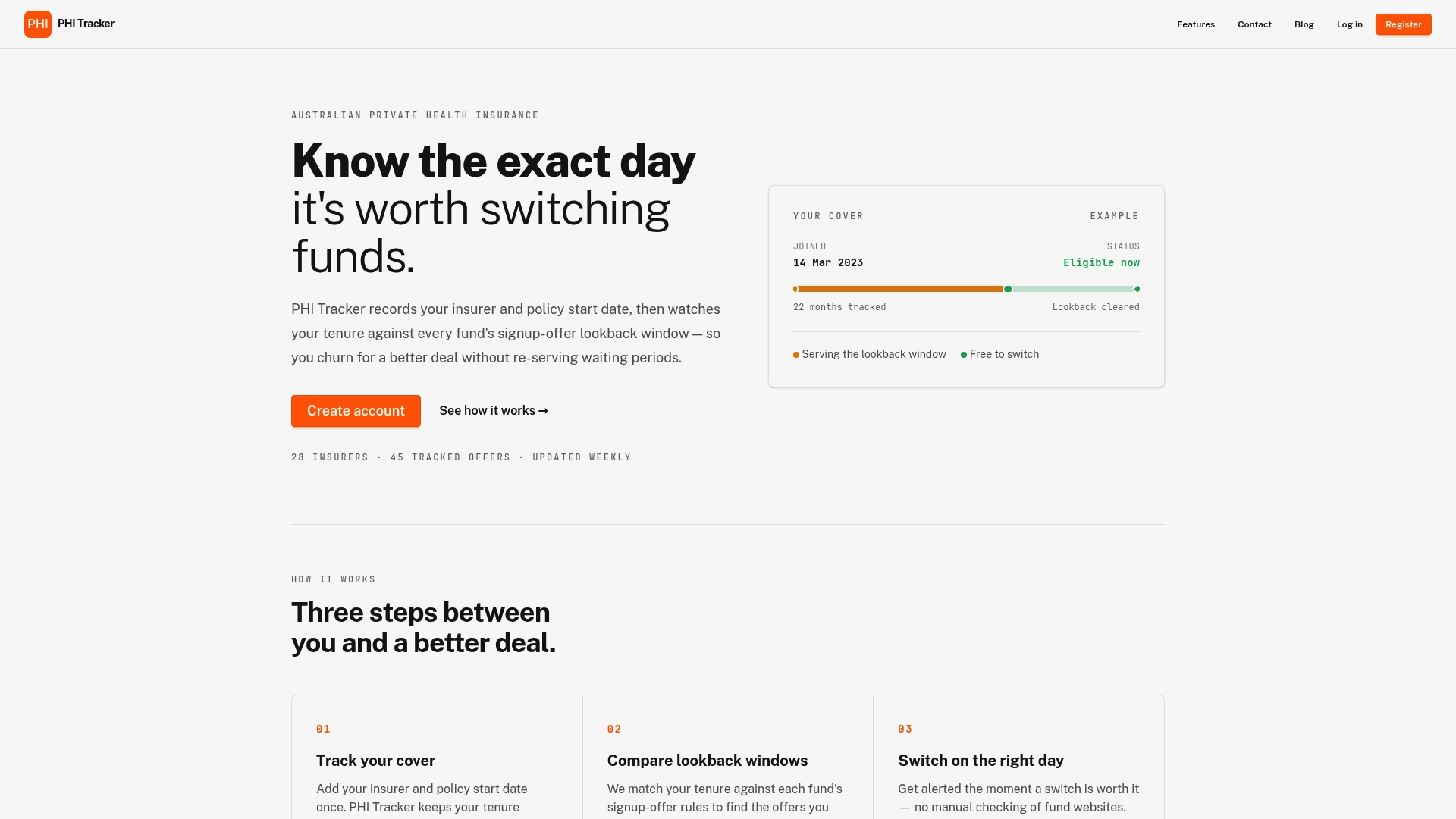
Tracking 28 Australian health funds manually to find the right moment to switch is genuinely tedious. Policy Hop monitors your policy tenure against insurer signup offers and alerts you at the precise point when you can switch to a better deal without triggering new waiting periods.
The core features relevant to waiting period waivers:
- Tenure tracking: Policy Hop records your policy start date and calculates exactly which waiting periods you have served.
- Offer eligibility alerts: with a database of 28 insurers and 45 tracked offers updated weekly, Policy Hop flags when a fund's promotional waiver window matches your eligibility.
- Transfer timing recommendations: alerts tell you when to request your Transfer/Clearance Certificate so the switch is seamless.
Policy Hop surfaces the timing and the offers. Your insurer's PDS and written confirmation remain the final authority on what is actually waived. Check your eligibility and set up alerts at Policy Hop — the free account tier lets you start tracking immediately.
Official resources and insurer pages to check now
- Department of Health — waiting periods and exemptions: the authoritative government page covering statutory maximums, the mental health exemption, and accident exceptions.
- Privatehealth: plain-language explanation of portability, Transfer/Clearance Certificates, and what triggers new waits.
- Private Health Insurance Ombudsman — mental health factsheet: detailed rules on the once-only psychiatric exemption and how to use it correctly.
- Private Health Insurance Act 2007: the legislation underpinning portability and Transfer/Clearance Certificate requirements.
- Policy Hop — waiting periods complete guide: practical steps for requesting certificates, timing switches, and getting written confirmation of waivers.
Your PDS is the final source of policy-specific detail. No guide, comparison site, or call centre script overrides what is written in your own policy document.
This article is general information, not a substitute for advice from a qualified financial advisor. Consult a qualified financial professional about your own circumstances before acting on anything here.
Sources
- Waiting periods and exemptions | Australian Government Department of Health
- Privatehealth
- Mental health treatment and private health insurance | Ombudsman factsheet
- Legislation
Recommended
- Private Health Insurance Waiting Periods in Australia: The Complete Guide · Health fund offer tracking
- How to Switch Private Health Insurers in Australia Without Losing Cover · Health fund offer tracking
- How health fund signup offers work in Australia · Health fund offer tracking
- Lifetime Health Cover Loading Explained · Health fund offer tracking
Ready when you are
Track your cover, switch on the right day.
PolicyHop watches your tenure against every fund's lookback window and tells you when a switch is worth it — free to start.
Create free account